Improving EMS Training Operations Through Structured Platform Integration
How a high-volume EMS academy transformed training preparation and coordination with Clinical Training Systems
Overview
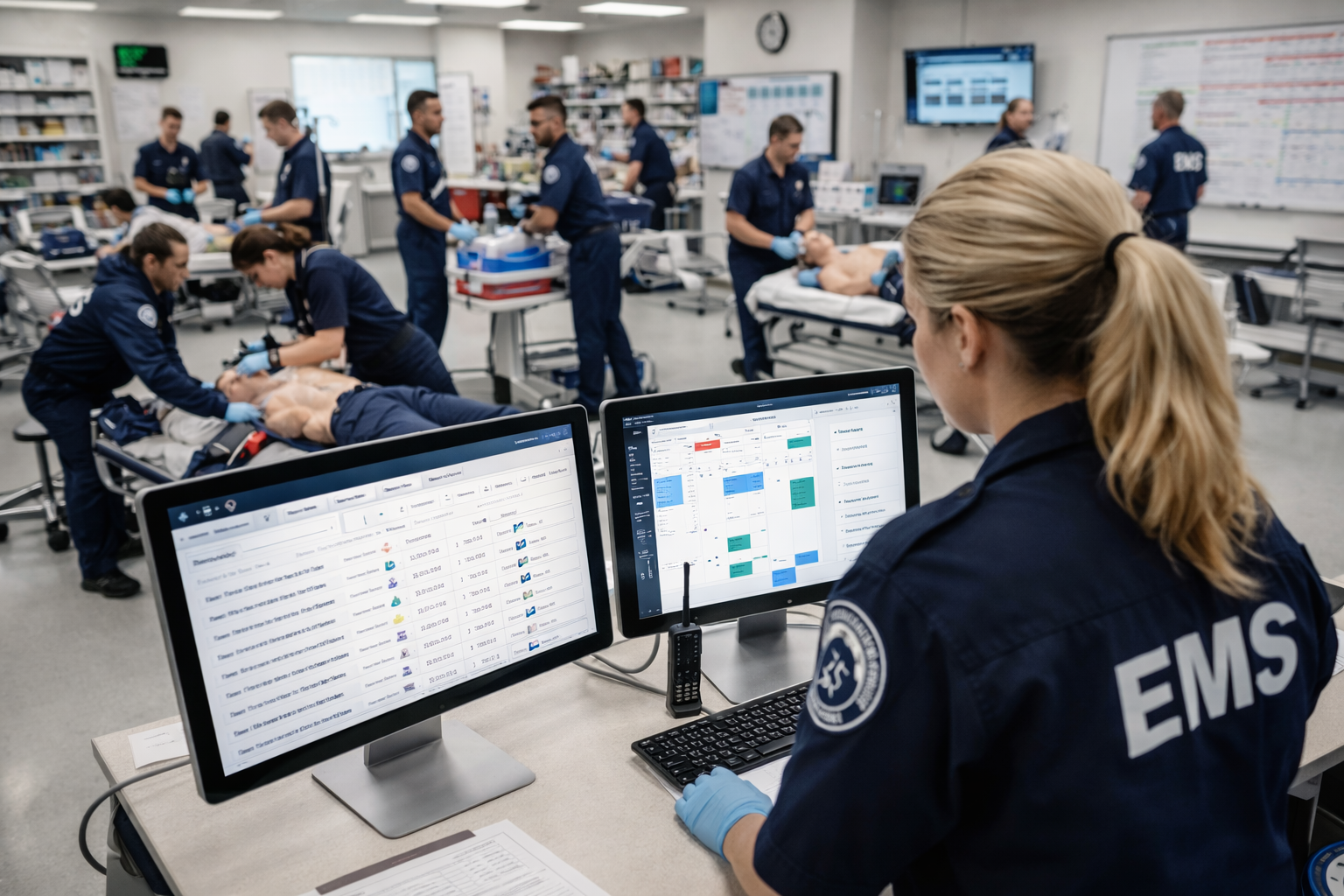
A high-volume EMS training academy responsible for delivering advanced prehospital education identified growing operational challenges associated with scenario development, lab coordination, and training resource management. As training demands increased across multiple concurrent cohorts, administrative workload expanded and operational efficiency was increasingly dependent on manual preparation and coordination.
Clinical Training Systems was developed and implemented to introduce a centralized, structured platform for managing training scenarios and lab operations.
Operational Environment
The academy operates a continuous training schedule supporting multiple cohorts and frequent scenario-based lab sessions. Training operations require daily preparation of structured clinical scenarios, assignment of instructors across lab rooms and rotations, and coordination of training materials and operational readiness.
Prior to platform implementation, these processes were performed manually using separate documents, manual scheduling, and independent preparation workflows.
Operational characteristics included:
- Multiple concurrent training cohorts
- Daily scenario-based laboratory training sessions
- Rotational lab structure with multiple instructors
- High volume of scenario preparation and instructional coordination
- Ongoing operational resource and training workflow management
Challenges
Manual Scenario Preparation
Scenario development required manual construction, formatting, and distribution. This created significant daily administrative workload and introduced variability in scenario structure and preparation time.
Complex Lab Coordination
Assigning instructors, scenarios, and lab rooms required manual coordination across multiple schedules and documents, increasing administrative overhead and reducing operational efficiency.
Lack of Centralized Training Infrastructure
Scenario materials and assignments were managed across multiple systems and documents, limiting visibility and creating dependency on manual processes.
Administrative Time Burden
Training leads were required to devote substantial time to preparation and coordination tasks, reducing available time for instructional oversight and training quality management.
Solution
Clinical Training Systems was implemented as a centralized platform to support structured scenario generation, scenario management, and lab coordination.
The platform enabled training leadership to:
- Generate structured clinical scenarios through a centralized system
- Assign scenarios and instructors across lab rooms and rotations
- Store and manage scenario libraries for reuse and consistency
- Produce organized instructor-ready scenario packages
- Maintain structured operational control over training workflows
The system established a consistent and repeatable framework for scenario management and lab preparation.
Results
Following implementation, the academy experienced measurable operational improvements.
Reduced Administrative Preparation Time
Scenario creation, assignment, and distribution processes were streamlined, reducing manual preparation workload and improving operational efficiency.
Improved Training Consistency
Standardized scenario structure improved instructional consistency across instructors and cohorts.
Centralized Operational Visibility
Training leadership gained a unified view of training activities, scenario assignments, and operational readiness.
Improved Instructor Readiness
Instructors received structured, organized scenario materials, improving lab execution efficiency and reducing preparation variability.
Scalable Training Infrastructure
The platform provided a scalable operational foundation capable of supporting ongoing program growth and increased training volume.
Conclusion
Clinical Training Systems transformed training preparation and coordination from a manual, fragmented process into a centralized and structured operational workflow. The platform improved efficiency, increased consistency, and strengthened the academy's ability to deliver high-quality training at scale.
Clinical Training Systems is designed to support EMS academies, fire departments, and clinical training programs seeking to modernize training operations and establish scalable, structured training infrastructure.